Day: June 12, 2025

XRP Price Prediction: More Downside Ahead?

This post was originally published on this site
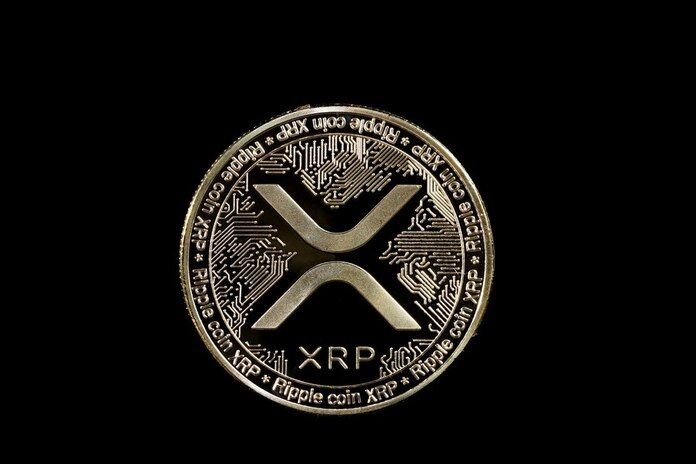
Ripple’s native token XRP (CRYPTO:XRP) is facing renewed selling pressure, as bearish signals point to potential further losses. After hitting a 2025 peak of $2.65 in May, XRP has since dropped by roughly 15% to trade around $2.25. This shift in market sentiment has triggered concern among investors and analysts, fueling a more cautious XRP price prediction for the months ahead.

Global Tensions Weigh on Crypto Sentiment

Part of the recent decline stems from subdued market reactions to the latest developments in US-China trade relations. Despite progress in negotiations and a revised framework on tariffs, cryptocurrency markets failed to respond positively. Instead, uncertainty surrounding global liquidity and capital flows has contributed to weaker appetite for high-volatility assets like XRP.

The pessimism isn’t isolated to XRP alone—it reflects a broader cool-off in the crypto market, especially for tokens not directly tied to ongoing hype cycles in artificial intelligence or memecoins.

Ripple Eyes SWIFT’s Market Share

Despite near-term headwinds, Ripple continues to pursue long-term dominance in the cross-border payments space. At the XRP Ledger Apex 2025 summit, Ripple CEO Brad Garlinghouse outlined an ambitious goal: capturing up to 14% of SWIFT’s global liquidity within five years.

SWIFT, the legacy international payments network, controls much of the messaging and liquidity infrastructure for global banking. Ripple’s RippleNet—along with its On-Demand Liquidity (ODL) system powered by XRP—offers a faster, blockchain-based alternative. Major financial institutions like MoneyGram, Santander, and SBI Holdings are already testing or using ODL.

Still, integration into systems like SWIFT remains uncertain. SWIFT itself is preparing for its ISO 20022 upgrade in November, which may introduce its own blockchain tools—making Ripple more of a competitor than a partner.

Institutional Adoption Could Drive Long-Term Growth

In contrast to short-term market weakness, institutional interest in XRP remains strong. Singapore-based Trident Digital Tech Holdings (NASDAQ:TDTH) recently announced a $500 million XRP Treasury fund, marking a notable vote of confidence from the corporate sector.

The fund, advised by Chaince Securities LLC, plans to build long-term reserves of XRP while exploring staking strategies to generate yield. Trident’s CEO, Soon Huat Lim, said the move is part of a larger mission to show how public companies can responsibly engage with decentralized finance (DeFi).

Should regulatory approvals go smoothly, Trident expects to begin deploying the fund in the second half of 2025. This initiative could provide ongoing support to XRP’s price by removing supply from circulation and reinforcing its role in the institutional DeFi landscape.

Technical Outlook: Bearish Momentum Builds

From a technical analysis standpoint, the XRP price prediction is becoming increasingly cautious. The token is trading just below a key resistance area near $2.26—formed by the confluence of the 50-day Exponential Moving Average (EMA) and the previously broken support level. This suggests that any short-term rally could be capped unless XRP breaks through decisively.

A failure to hold current levels could trigger a deeper correction, with the next strong support found around the 200-day EMA at $2.09—roughly 7% below current prices. Meanwhile, the Relative Strength Index (RSI) has dipped below the 50 threshold, indicating growing bearish momentum.

On the positive side, the Moving Average Convergence Divergence (MACD) indicator still shows a buy signal, which could slow or reverse the decline if buyers step in. For bulls, reclaiming $2.34, $2.50, and ultimately $2.65 would be essential to resume an uptrend.

Conclusion: XRP Holds Long-Term Promise but Faces Near-Term Pressure

The current XRP price prediction reflects a delicate balance between bearish short-term momentum and bullish long-term fundamentals. Regulatory challenges, global macro uncertainty, and technical resistance are weighing on price action. However, Ripple’s growing institutional adoption and ambitions to rival SWIFT provide reasons for optimism.

Investors should brace for volatility but keep an eye on developments in both Ripple’s partnerships and global financial infrastructure. Whether XRP breaks higher or trends lower may depend as much on global politics as it does on blockchain innovation.

Featured Image: Freepik

Please See Disclaimer

How a US-China Trade Freeze Could Impact Crypto

This post was originally published on this site

As geopolitical tensions escalate, a US-China trade freeze—once unthinkable—is now within the realm of possibility. For investors, such a seismic economic shift could upend global markets and trigger ripple effects across every asset class, including cryptocurrency. While the Federal Reserve recently assured Congress it will not follow China’s path of banning crypto, digital assets could still face unprecedented tests under a full-scale freeze in US-China trade.

Bitcoin Could Emerge as a Modern Safe Haven

In periods of economic stress, investors traditionally flock to safe havens like gold. However, over the past decade, Bitcoin (CRYPTO:BTC) has increasingly served as “digital gold.” If a US-China trade freeze were to occur, faith in traditional financial institutions and fiat currencies could erode. This crisis of confidence might push both institutional and retail investors toward decentralized alternatives.

As a result, Bitcoin could experience significant demand growth—not just for speculative gains, but as a store of value detached from national borders and government policy.

US Dollar Pressure Could Boost Crypto Appeal

The US dollar currently functions as the world’s dominant reserve currency, supported by America’s trade leadership. But if trade with China collapsed, countries dependent on both economies might begin seeking alternatives to the greenback. That’s where digital currencies could shine.

Cryptocurrencies like Bitcoin, Ethereum (CRYPTO:ETH), and XRP (CRYPTO:XRP) offer borderless, decentralized means of exchange. XRP, in particular, is designed for fast, low-cost cross-border transactions and could gain favor among emerging-market nations looking for dollar alternatives.

In this context, a US-China trade freeze might accelerate the mainstream use of cryptocurrencies for international commerce and payments.

Emerging Markets May Embrace Crypto Faster

A breakdown in US-China relations would likely lead to global supply chain disruption, rising inflation, and economic instability—especially in developing countries. In these regions, where local currencies and banking systems are already fragile, crypto could become a lifeline.

Stablecoins such as USDC (CRYPTO:USDC) and USDT (CRYPTO:USDT) may see a surge in adoption as people seek to preserve value. Meanwhile, decentralized finance (DeFi) platforms could offer alternatives to traditional banking services, from loans to savings, in places where financial infrastructure is weak or inaccessible.

Governments May Tighten Crypto Regulations

Despite its advantages during economic turbulence, cryptocurrency is not immune to regulatory risk. A US-China trade freeze could trigger governments to act defensively, imposing strict controls to limit capital flight and ensure economic sovereignty.

Both the US and China have previously cracked down on crypto when it challenged monetary control. In a prolonged trade standoff, more aggressive regulations could emerge, targeting crypto transactions, exchanges, and private wallets. This would particularly affect coins used for anonymous or untraceable transfers, which could be viewed as potential threats to national security or tools for sanctions evasion.

Expect High Volatility in Crypto Markets

Although crypto could ultimately benefit from a US-China trade freeze, the short-term market response would likely be chaotic. Global financial markets tend to react to uncertainty with sharp sell-offs—and crypto is no exception. As liquidity dries up, even popular tokens like Bitcoin and Ethereum could see sudden price drops.

However, crypto markets have a history of rebounding from fear-driven downturns. Once the initial panic subsides, speculative investors might return with renewed interest, betting on digital assets playing a pivotal role in the post-trade-freeze financial order.

Final Thoughts: A Geopolitical Stress Test for Crypto

A US-China trade freeze would act as a stress test for global financial systems—including digital assets. While the initial impact on crypto could be turbulent, long-term outcomes may favor increased adoption and decentralization. From digital gold to stablecoins and DeFi, crypto’s utility during times of uncertainty may solidify its role in the next era of global finance.

For forward-thinking investors, monitoring geopolitical shifts like the potential US-China trade freeze is essential to understanding crypto’s evolving place in the world economy.

Featured Image: Freepik

Please See Disclaimer

Live Caffeine demonstration rounds out a landmark day at the 2025 World Computer Summit

This post was originally published on this site

SINGAPORE, June 11, 2025 /PRNewswire/ — On June 3rd 2025, DFINITY Foundation hosted a market-leading selection of international technologists, developers, policy makers, community members, builders, and pioneers in Zürich for the second World Computer Summit  (WCS) – a one-day event dedicated to the future of the open internet.

The event focused on several themes, all critical to the realisation of the World Computer vision. These included the topics of decentralised compute, sovereign cloud and data infrastructure, tamperproof and autonomous infrastructure, the role and need for AI on chain, the investment and regulatory landscape, and the many efforts DFINITY is undertaking to help make digital landscapes safer, more productive, and more interconnected than ever before. The diverse range of influential speakers spanned companies and institutions such as Animoca Brands, UNDP, Cisco, Heidrick & Struggles, ETH Zurich, 21Shares, Boston Consulting Group, Credit Agricole Italia, and many more, who all shared a similar message: decentralization and AI adoption are no longer abstract concepts or nice to haves – but an urgent, achievable reality.

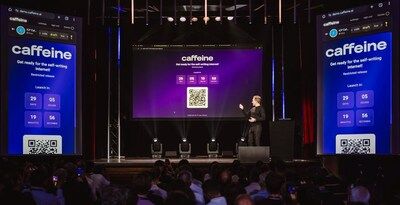
With more than 1,000 attendees welcomed for a Main Stage program of keynotes, panels, firesides, demos, the most notable moment of the day came just before the event’s close, as DFINITY Foundation’s Founder and Chief Scientist, Dominic Williams, unveiled a new paradigm for the Self-Writing Internet.

As Dom delivered the world’s first, live, onstage demo of DFINITY’s hotly anticipated Caffeine AI tool, it was clear for all those in attendance that this secure, customisable, end-to-end, app builder has the potential to radically transform the lives of anyone with internet access – all through its easy-to-use natural language prompt and highly intuitive user interface. He also announced the opening of the hotly anticipated waitlist for alpha access, with sign ups now accessible via the dedicated microsite join.caffeine.ai. Caffeine is the world’s first self-writing apps platform, and represents a milestone development for DFINITY Foundation.

Live Caffeine demonstration rounds out a landmark day at the 2025 World Computer Summit

Community engagement and developer activations

One of the most notable aspects of WCS25 was the strength and enthusiasm of the ICP builder and holder community, with an entire section of the event staged to platform, engage, and demonstrate ICP’s exceptional capabilities to builders of all levels of growth. From early-stage developers to established dapp teams and infrastructure providers, this part of the event highlighted the diversity and momentum of the ICP ecosystem.

Pitches and Panels in this section included notable ICP projects, such as KongSwap, Liquidium, PiggyCell, Omnity Network, and more.

Throughout the day, the Ecosystem Stage played host to an engaging array of demonstrations, project pitches, use cases and builder tools, spanning DeFi, Agentic AI, RWA, and more. DFINITY’s expert teams also delivered critical project milestone updates and capability demonstrations for OISY Wallet and Chain Fusion technologies, to name just a few.

A new era of Internet Computer 2.0

As the Summit drew to a close, it was clear that the movement for an open, decentralized Internet focusing on accessibility, data sovereignty and ownership is growing – and will be fueled by a combination of developer ambition and AI capabilities. The DFINITY Foundation remains steadfast in its commitment to pushing forward to make this vision a reality, pushing the boundaries of what is possible and contributing to the development of breakthrough, real-world, applications.

Speaking on the demonstration, Dominic Williams said, “We are proud to announce the advent of Internet Computer 2.0. The network now provides a unique cloud computing environment that enables AI to build solo. Today we demonstrated an incredible alpha version of the platform, which will be followed by a beta in about a month that will be released to the public. We are targeting a future where everyone in the world can create online functionality just by talking.”

Catch up on a recording of the live demonstration here. Check out more information about DFINITY and ICP’s vision here.

Photo – https://megastockalert.com/wp-content/uploads/2025/06/Live_Caffeine_demonstration_rounds_a_landmark_day_2025_World_Computer.jpg

Cision View original content:https://www.prnewswire.co.uk/news-releases/live-caffeine-demonstration-rounds-out-a-landmark-day-at-the-2025-world-computer-summit-302479138.html

Featured Image: depositphotos @ grey82

Disclaimer

Compare