Day: August 5, 2025

Corporate Ether Investments Surge in 2025

This post was originally published on this site

In the latest chapter of the digital asset revolution, corporate ether investments are emerging as a strategic play for small public companies looking to diversify and grow their balance sheets. Ethereum (ETH), the second-largest cryptocurrency by market cap, is gaining favor over Bitcoin as a more dynamic and functional store of value, thanks to its staking rewards and the decentralized finance (DeFi) ecosystem it powers.

According to a Reuters analysis of regulatory filings, publicly listed companies held at least 966,304 ether tokens as of the end of July 2025, representing nearly US$3.5 billion in value. That’s a massive leap from just under 116,000 ETH held at the end of 2024—an increase of more than 700%.

Why Ether is Replacing Bitcoin in Treasury Strategies

Ethereum offers advantages that Bitcoin lacks, particularly in utility and yield. While Bitcoin is primarily viewed as digital gold, ether powers a functional ecosystem and generates income through staking—a process that allows holders to lock their tokens to support the network and earn rewards.

Staking yields currently range between 3% and 4%, adding an active return component that appeals to companies seeking yield on idle capital.

“Ether balances growth potential with the legitimacy of a blue-chip asset,” said Sam Tabar, CEO of Bit Digital (NASDAQ:BTBT), which holds ETH on its balance sheet. “It’s institutional-grade, but still early enough in its adoption curve to benefit from future upside.”

Ether’s Appeal: Not Just a Store of Value

Ether isn’t just a speculative asset—it’s the backbone of decentralized finance. The Ethereum blockchain supports a range of financial applications including lending, trading, and stablecoins, which makes ether comparable to oil, as opposed to Bitcoin’s gold-like qualities.

“Holding ether is more like owning oil,” said Anthony Georgiades, general partner at Innovating Capital. “It’s the foundation of decentralized finance, not just a pure store of value.”

Caution in the Face of Hype

The market has reacted strongly to announcements of ether acquisitions. Shares of BitMine (OTC:BTMN), which is backed by Peter Thiel, soared 3,679%, while GameSquare Holdings (NASDAQ:GAME) jumped 123% following similar disclosures earlier this year.

But not everyone is convinced the gains are sustainable.

“The share price response has the hallmarks of the meme craze,” warned Dan Coatsworth, investment analyst at AJ Bell.

Indeed, ether’s volatility and the complexity of staking mechanisms present challenges for most corporate treasuries. Regulatory ambiguity also continues to cloud adoption.

Regulatory Gray Zones Remain a Barrier

Despite recent signals from the Securities and Exchange Commission (SEC) suggesting a softer stance on staking, legal uncertainties persist. Key questions remain unresolved:

  • Are staking rewards considered taxable income?

  • Should locked ETH be recorded as a liability or asset?

  • Could offering staking services make companies de facto custodians?

“Every staking reward could be landing in a compliance gray zone,” said Michael Ashley Schulman, partner and CIO at Running Point Capital Advisors.

For many CFOs, these unanswered questions are enough to limit exposure.

“Most CFOs would not swap liquid cash for ether,” said Anuj Karnik, managing director at Straitsberg, a Singapore-based treasury advisory firm. “It remains a niche tool best left to tech-forward treasuries.”

Still, Companies Double Down on Ether

Despite the risks, several firms are going all in. BitMine recently raised US$182 million through a stake sale to ARK Invest, led by Cathie Wood. GameSquare CEO Justin Kenna also confirmed the company is considering selling stock to increase its ether holdings.

While it may not yet be mainstream practice, corporate ether investments are undeniably on the rise—and could become a defining trend in treasury strategy for risk-tolerant, forward-looking firms in 2025 and beyond.

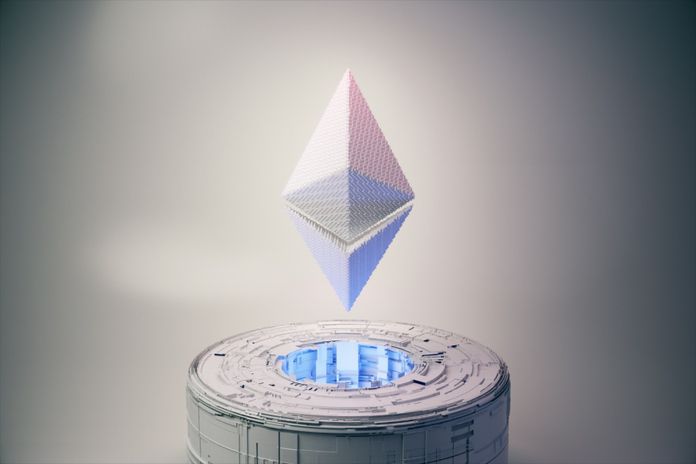
Featured Image: Freepik
Please See Disclaimer

Coinbase Embedded Wallets Beta Launches

This post was originally published on this site

Coinbase Global Inc. (NASDAQ:COIN) has taken a bold step forward in expanding its developer ecosystem with the launch of its beta for Coinbase Embedded Wallets. This strategic move aims to simplify crypto integration into third-party applications, while strengthening self-custody capabilities for users.

The Coinbase Embedded Wallets feature is a major component of the Coinbase Developer Platform (CDP), and could signal a major turning point for crypto application development.

What Are Coinbase Embedded Wallets?

At its core, Coinbase Embedded Wallets allow developers to integrate self-custodied crypto wallets directly into their apps through an API-powered interface. This eliminates the need for external browser extensions or complex wallet setup processes.

Instead of requiring users to manage private keys and seed phrases—often seen as a hurdle for crypto adoption—the embedded wallet system enables web2-style logins using email, SMS, or OAuth. These simplified onboarding methods drastically reduce friction, allowing non-technical users to create wallets in less than 200 milliseconds with a single command:

According to Coinbase’s blog post, this single command is enough to spin up a wallet tied to an email address, allowing developers to offer crypto functionality with minimal setup.

Coinbase Embedded Wallets Leverage TEE Security

Security is a cornerstone of the Coinbase Embedded Wallets initiative. The tool leverages the same infrastructure and security features as Coinbase’s flagship trading products, notably Trusted Execution Environments (TEEs).

TEEs isolate sensitive processes and store private keys in encrypted environments, adding a high level of protection without placing security burdens on the end user. Developers gain access to Coinbase’s mission-critical infrastructure, while retaining full control over user experience.

A unified API stack also powers advanced functionality such as:

  • Transfers and trades

  • Token balances

  • Staking and rewards

  • Cross-chain interactions

This infrastructure removes the heavy lifting for developers, allowing them to plug into Coinbase’s mature backend while building intuitive user interfaces.

Free Access Until September 30, 2025

To accelerate adoption of Coinbase Embedded Wallets, the company is offering free access for Onramp customers until September 30, 2025. This promotional window lowers the barrier for startups, web3 builders, and creators to experiment with the technology and integrate it into their products.

Coinbase is betting that this early-stage incentive will drive usage and help expand its developer base significantly—especially as blockchain adoption continues to grow across finance, gaming, and social platforms.

Use Cases: From DeFi to Creator Economy

The use cases for Coinbase Embedded Wallets span a wide range of industries. In its announcement, Coinbase highlighted potential applications in:

  • Remittance platforms for fast, cross-border payments

  • DeFi marketplaces for swapping and staking assets

  • B2B payroll systems handling tokenized compensation

  • Creator economy tools for tipping, donations, or rewards

  • Blockchain games with integrated wallet and token features

Early adopters like Zylu and Stablelink are already demonstrating real-world applications. Zylu, for instance, enables frictionless payments between countries, while Stablelink simplifies donation flows for nonprofits.

Coinbase’s Broader Strategy

The launch of Coinbase Embedded Wallets aligns with the company’s broader push into infrastructure-as-a-service for the crypto industry. As regulatory pressure grows on centralized exchanges, Coinbase is positioning itself not just as a trading platform, but as a foundational layer for web3 developers.

By offering tools like Embedded Wallets, Coinbase could begin competing with infrastructure providers such as Alchemy, WalletConnect, and even MetaMask. If successful, this beta could evolve into a new revenue stream while reinforcing Coinbase’s relevance in a rapidly evolving decentralized ecosystem.

Final Thoughts

The Coinbase Embedded Wallets beta represents a key inflection point for both Coinbase and the broader crypto development community. With simplified onboarding, powerful APIs, and top-tier security, the tool has the potential to radically lower barriers to blockchain adoption.

As Coinbase (NASDAQ:COIN) continues to pivot from consumer-facing exchange to full-service infrastructure provider, innovations like Embedded Wallets will be critical in maintaining its edge in the web3 race.

Featured Image: Freepik

Please See Disclaimer

Casio to Deliver Metaverse-Based Experiences in Collaboration Between G-SHOCK and The Sandbox

This post was originally published on this site

Offering Limited-Edition NFTs and Game Content Expressing the Brand’s Worldview

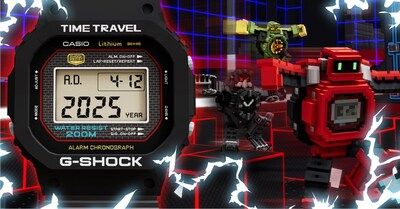
TOKYO, Aug. 5, 2025 /PRNewswire/ — Casio Computer Co., Ltd. announced today a collaboration with the Web3*[1] metaverse gaming platform The Sandbox as part of the VIRTUAL G-SHOCK project involving the G-SHOCK brand of shock-resistant watches. In an ongoing rollout beginning September 3th, game content offering experiences of the G-SHOCK worldview will be made available, along with limited-edition non-fungible tokens (NFTs) and avatars.

KEY VISUAL

*[1] Web3 (Web 3.0) refers to the next generation of the Internet, a decentralized network realized with blockchain technology.

Now, as part of the project, G-SHOCK City will be made available on the Web3 metaverse gaming platform The Sandbox, and limited-edition NFTs will be sold. Visitors to G-SHOCK City will have opportunities to learn about G-SHOCK history in an adventure-game format and enjoy survival races based on a shock-resistance testing theme.

Overview of the “G-SHOCK Droid Collection” Avatar Sale

G-SHOCK DROID COLLECTION

A robot-style official avatar for The Sandbox, inspired by the iconic G-SHOCK design, will be released. Based on G-SHOCK four iconic styles — DW-5600, DW-6900, GA-110, and GA-2100 — as well as the bold and oversized GA-V01, each avatar features a unique design that makes the most of the special properties of NFTs.

Schedule

  • Allowlist*[2] registration start date: 2:00pm, August 5 (Tues), 2025 (UTC)
  • Date of sales launch: 2:00pm, September 3 (Wed), 2025 (UTC)

*[2] Register of pre-approved users with preferential rights to purchase NFTs

Sales prices

*[3] SAND is the native utility token of The Sandbox, used for participating in the platform’s ecosystem, purchasing items, and accessing experiences.

Photo – https://megastockalert.com/wp-content/uploads/2025/08/image_5009366_22010921.jpg
Photo – https://megastockalert.com/wp-content/uploads/2025/08/1.jpg

Cision View original content:https://www.prnewswire.co.uk/news-releases/casio-to-deliver-metaverse-based-experiences-in-collaboration-between-g-shock-and-the-sandbox-302521553.html

Featured Image: depositphotos @ Primakov

Disclaimer

Compare