Day: August 7, 2025

Why Crypto Tax Reporting Matters More Than Ever

This post was originally published on this site

With digital assets becoming more mainstream, crypto tax reporting is no longer optional or obscure. As regulations tighten for the 2025 tax year, anyone who buys, sells, trades, or earns cryptocurrency must understand how these transactions are taxed—or risk hefty penalties from the IRS.

Recent IRS actions and regulatory changes mean crypto tax reporting will be a top priority in 2026 filings. Form 1099-DA, wallet-level tracking, and enhanced scrutiny over DeFi and staking activities are raising the stakes for crypto investors across the board.


Cryptocurrencies Are Taxable by Default

A common misconception among newer investors is that crypto isn’t taxed because it’s “decentralized.” According to tax attorney and CPA Chad Cummings, that assumption is wrong. All digital asset transactions are subject to the Internal Revenue Code. That includes transactions even if the crypto remains in a wallet or was never converted to fiat currency.

If you’ve traded or spent crypto in 2025, crypto tax reporting obligations apply.


Know When You’ll Be Taxed

Not every crypto action triggers taxes. Simply buying and holding a cryptocurrency does not create a taxable event. However, you’ll need to report capital gains or losses when:

  • You sell cryptocurrency for fiat

  • You trade one crypto for another

  • You use crypto to buy goods or services

  • You receive crypto for work or services rendered

Each of these actions requires you to calculate gains or losses based on the fair market value of the crypto at the time of the transaction.


Crypto Income: What Must Be Reported

Income from crypto is not just from selling. Receiving digital assets through mining, staking, or airdrops also counts as income and must be reported the year it’s received. This income is taxed at ordinary income rates, and even unsolicited airdrops are taxable.

For example, if you received staking rewards on a platform like Coinbase (NASDAQ:COIN) or tokens through DeFi farming, these are considered gross income under IRS rules.


Tracking Cost Basis Is Essential

Another major aspect of crypto tax reporting is accurately tracking your cost basis—the amount you originally paid for your crypto, including fees. When crypto is transferred between platforms or wallets, cost basis can get lost if not documented correctly.

For example, if you bought Bitcoin (BTC-USD) on Robinhood (NASDAQ:HOOD) and later moved it to another wallet, make sure to record the original value to calculate capital gains or losses accurately.


IRS Will Track Exchanges and Wallets

Starting with the 2025 tax year, new rules will require crypto exchanges to issue Form 1099-DA to report transactions directly to the IRS. Wallet-level tracking is now a must. Mismatches between your tax filing and exchange data could trigger audits or penalties.

Nicholas Slettengren, founder of Count On Sheep, warns: “Forget flying under the radar. Everything from DeFi to staking is on their watchlist now.”


How to Deduct Losses and Avoid Fines

You can deduct realized crypto losses to offset gains—up to $1,500 for individuals or $3,000 for joint filers. But if you don’t have accurate records to back up those claims, deductions could be denied.

In serious cases, failure to comply with crypto tax rules can result in penalties of up to 40%, plus interest—or even criminal charges.


Use Crypto Tax Software or a Pro

Given the complexity of crypto tax reporting, using specialized tools like CoinLedger or Koinly is highly recommended. These platforms integrate with exchanges and wallets to help track trades, calculate gains, and generate tax forms.

For large or complex portfolios, working with a blockchain-savvy tax professional can reduce your audit risk significantly.


Final Word: Stay Ahead of the Curve

Crypto tax rules are no longer in a legal gray zone. With the IRS stepping up enforcement, proper crypto tax reporting isn’t just a good idea—it’s a necessity. Keeping detailed records, reporting every taxable event, and using the right tools will save you from major headaches come April 2026.

Featured Image:  Freepik © ruslan_ivantsov

Please See Disclaimer

Crypto Retirement Investments Get a Boost

This post was originally published on this site

A major shift in U.S. retirement planning is on the horizon—and crypto retirement investments may soon be at the center of it.

On Thursday, both cryptocurrencies and crypto-related stocks rallied in anticipation of a new executive order from President Donald Trump. The upcoming order aims to open 401(k) plans and other retirement accounts to alternative assets, including Bitcoin and private equity.

This marks a groundbreaking moment for crypto retirement investments, which have long been considered too speculative for traditional retirement vehicles.


Bitcoin and Crypto Stocks Surge on the News

Bitcoin (CRYPTO:BTC) soared above $116,000 on Thursday, climbing more than 1% intraday. Other major cryptocurrencies followed suit: Ether (CRYPTO:ETH) and XRP (CRYPTO:XRP) each gained over 4%.

Publicly traded crypto companies also rallied:

  • Coinbase (NASDAQ:COIN) jumped as much as 3%.

  • Robinhood (NASDAQ:HOOD) and MicroStrategy (NASDAQ:MSTR) gained over 1.5%.

The surge reflects investor enthusiasm over the potential for crypto retirement investments to become a mainstream option. If passed, Trump’s executive order could open trillions in retirement capital to digital assets.


What’s in the Executive Order?

President Trump is expected to direct the Securities and Exchange Commission (SEC) to facilitate the inclusion of alternative assets in retirement portfolios.

Traditionally, 401(k) accounts offer a limited range of investments, mostly mutual funds or index-based products. Trump’s move would signal a paradigm shift—allowing digital assets, private equity, and other alternatives to enter the mix.

The order builds on momentum from Congress’s “Crypto Week” in July, which included the passage of:

  • The GENIUS Act (now signed into law), creating a regulatory framework for stablecoins.

  • The Clarity Act, defining crypto regulation boundaries.

  • The Anti-CBDC Surveillance State Act, aimed at limiting Federal Reserve-issued digital currencies.

Together, these efforts point to growing federal support for a more open crypto retirement investment ecosystem.


Wall Street Giants Back the Plan

Large asset managers are also warming to the idea. Firms like BlackRock (NYSE:BLK) and KKR (NYSE:KKR) have expressed support for expanding retirement portfolios to include private and digital assets.

In a recent investor letter, BlackRock CEO Larry Fink emphasized that private assets like crypto and real estate can help lift long-term returns and protect investors during downturns.

“Private assets are legal, beneficial, and becoming more transparent,” Fink wrote.

Their support signals that the rise of crypto retirement investments isn’t just a retail trend—it’s being embraced at the institutional level.


Caution Still Advised

Not everyone is celebrating. Financial advisors and retirement experts have urged Americans to approach crypto retirement investments with caution.

Digital assets are still volatile, and some private investments lack the liquidity and transparency typical of traditional retirement products.

That said, many see the executive order as a step toward democratizing access to high-growth assets once reserved for the ultra-wealthy or institutional investors.


What It Means for Investors

If signed, Trump’s order could transform how Americans plan for retirement. While regulatory details are still forthcoming, it’s clear that crypto retirement investments are moving into the mainstream.

For long-term investors, this could mean:

  • More options in 401(k) plans.

  • Access to higher-growth assets (with higher risk).

  • Increased flexibility in retirement strategies.

With crypto markets still relatively young, today’s rally suggests investors are optimistic about the future of digital assets—not just as speculative tools, but as part of long-term wealth planning.

Featured Image:  Freepik © ojosujono96

Please see disclaimer

From Blockchain to Space: HTX Leads GM Vietnam 2025, Justin Sun’s New Web3 Journey Takes Flight

This post was originally published on this site

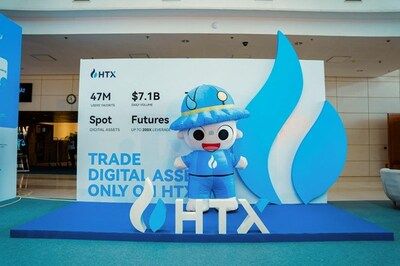
PANAMA CITY, Aug. 7, 2025 /PRNewswire/ — HTX, a leading global crypto exchange, made a notable appearance at GM Vietnam 2025 – Vietnam Blockchain Week, held from August 1–2, 2025. As a proud sponsor of the Business Networking Zone, HTX showcased its forward-looking global strategy and reaffirmed its position as a key influencer in the Web3 industry.

The Rise of Stablecoins:From Crypto Instruments to Global Financial Infrastructure

During a key panel discussion titled “Stablecoin – The Most Viable Use Case for Crypto Adoption,” Alec Goh, Head of HTX Ventures, was a featured panelist.

Alec, head of HTX Ventures, was invited to join a themed roundtable discussion.

Alec highlighted the rapid evolution of stablecoins, noting their market capitalization has surged to over $250 billion — an impressive 60% increase this year. Driven by growing regulatory clarity in countries like the U.S. and active participation from traditional institutions, stablecoins are transcending their role as crypto-native tools to become core components of global financial infrastructure. This marks the early stages of their mainstream adoption. He further explained that in key sectors like on-chain credit, Real World Assets (RWA), and cross-border trade, stablecoins serve as the fundamental layer for value settlement and liquidity within digital financial infrastructure.

“The future isn’t a binary choice between centralized and decentralized systems, but a blend of compliance and composability,” Alec said. “Legal frameworks and on-chain technology will evolve together, enabling global scalability while preserving crypto’s core principles. Ultimately, whether a system is centralized or decentralized matters less than its ability to meet user needs. If decentralized transactions continue to deliver greater value, the market will naturally gravitate toward them.”

“Web3 Future Night” Ignites Passion and Drives Web3 Growth

The HTX booth at GM Vietnam 2025 drew a continuous crowd, creating a hub for networking and collaboration.

A major highlight of Vietnam Blockchain Week was the exclusive “Web3 Future Night” cocktail party, presented by HTX and hosted by ChainCatcher.

The party brought together a high-profile crowd, including top local project teams, leading investors, influential KOLs, and core community members. Industry-leading partners, including SoSoValue, Bifrost, TRADOOR, TRON, SunPump, and RootData, actively participated, creating a premier networking opportunity.

Through this event, HTX strengthened its partnership with the Vietnamese crypto community and helped drive the ongoing development and prosperity of the global Web3 ecosystem.

Justin Sun Becomes Youngest Chinese Commercial Astronaut

Justin Sun has completed his journey into space. (Image source: Blue Origin's official X)

During the Vietnam Blockchain Week, Justin Sun, Advisor to HTX, made history by successfully completing a suborbital flight aboard Blue Origin’s New Shepard spacecraft. The approximately 10-minute mission crossed the Kármán line, offering a zero-gravity experience before safely returning to the landing site in Texas. With this feat, he became the youngest Chinese commercial astronaut in history.

Following his historic journey, Justin said in an interview, “This was my first commitment and first step toward space, and there will be more to come in the future.” His achievement reflects not only his spirit of exploration but also HTX’s commitment, as a leading player in the global Web3 space, to continually push boundaries and explore new possibilities.

HTX made a strong impression at GM Vietnam 2025, reinforcing its position as a leader in the global Web3 space. The platform set the industry’s course with insightful analysis of stablecoin trends and sparked a new wave of collaboration through its “Web3 Future Night” event. Looking ahead, HTX remains committed to driving global Web3 ecosystem growth by integrating blockchain with emerging technologies and delivering greater value to its users and the broader crypto community.

About HTX

Founded in 2013, HTX (formerly Huobi) has evolved from a virtual asset exchange into a comprehensive ecosystem of blockchain businesses that span digital asset trading, financial derivatives, research, investments, incubation, and other businesses.

As a world-leading gateway to Web3, HTX harbors global capabilities that enable it to provide users with safe and reliable services. Adhering to the growth strategy of “Global Expansion, Thriving Ecosystem, Wealth Effect, Security & Compliance,” HTX is dedicated to providing quality services and values to virtual asset enthusiasts worldwide.

To learn more about HTX, please visit https://www.htx.com/ or HTX Square , and follow HTX on X, Telegram, and Discord.

Photo – https://megastockalert.com/wp-content/uploads/2025/08/image1.jpg
Photo – https://megastockalert.com/wp-content/uploads/2025/08/photo.jpg
Photo – https://megastockalert.com/wp-content/uploads/2025/08/image3.jpg
Photo – https://megastockalert.com/wp-content/uploads/2025/08/image4.jpg
Logo – https://megastockalert.com/wp-content/uploads/2024/09/image_ID__Logo.jpg

Cision View original content:https://www.prnewswire.co.uk/news-releases/from-blockchain-to-space-htx-leads-gm-vietnam-2025-justin-suns-new-web3-journey-takes-flight-302524062.html

Featured Image: depositphotos @ jamesteohart

Disclaimer

Compare