Author: Stephanie Bedard-Chateauneuf

Tron Reverse Merger Sends SRM Stock Soaring

This post was originally published on this site
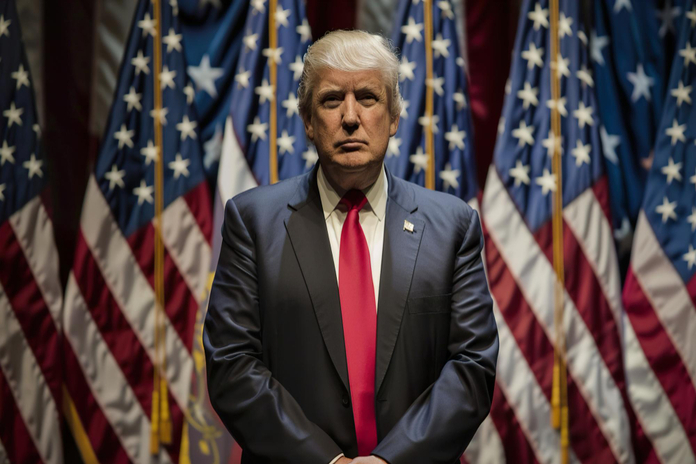
Justin Sun’s Tron reverse merger strategy is making waves across the crypto and stock markets. On Monday, Nasdaq-listed SRM Entertainment (NASDAQ:SRM) announced it had reached a landmark agreement with the blockchain platform Tron, triggering a massive rally in SRM stock.

This deal is no ordinary partnership—it involves a $100 million equity investment, a name change to Tron Inc., and the appointment of Justin Sun as a strategic adviser. If completed, this reverse merger could give Tron an indirect path to going public in the United States—a rare feat for a crypto firm in today’s regulatory climate.

What Is a Reverse Merger—and Why Is Tron Using One?

A reverse merger allows a private company to become publicly traded by merging with an already listed company, bypassing the traditional IPO process. In this case, Tron’s reverse merger with SRM Entertainment may enable it to list on the Nasdaq without enduring the scrutiny and timeline of a standard public offering.

According to SRM’s statement, a private investor is set to inject $100 million into the company, with that value potentially rising to $210 million if warrants are exercised. While the investor was not named, the Financial Times reports that the capital is expected to come directly from Tron itself.

Tron Inc. and SRM: What Happens Next?

Once the deal is finalized, SRM will reportedly be renamed Tron Inc., with Sun stepping in as an adviser. The current leadership structure and ownership details, however, remain unclear. SRM did not disclose whether Tron’s investment would lead to a change in control or management direction.

The move marks a striking pivot for SRM, a company previously focused on producing toys and souvenirs for theme parks. Its stock surged more than 300% on Monday, rising from $1.45 to a high of $6.70, reflecting investor excitement over the crypto collaboration.

Political Ties and Controversy Cloud the Deal

The Tron reverse merger is not without controversy. The deal was arranged by Dominari Securities, a boutique investment bank owned by Dominari Holdings, which recently welcomed Donald Trump Jr. and Eric Trump to its board. The Trump family’s growing presence in crypto-related ventures has sparked concern among political watchdogs and ethics experts.

Adding to the scrutiny, Justin Sun faces ongoing legal battles with the U.S. Securities and Exchange Commission (SEC). In 2023, the SEC filed a civil fraud lawsuit against him, which has since been paused. Sun is also a major investor in Trump’s World Liberty Financial, where he increased his stake to $75 million earlier this year.

Tron’s USD1 stablecoin is now listed on the World Liberty platform—raising questions about overlapping interests and the potential for conflicts of interest, particularly given Trump’s financial ties to the venture.

Crypto Meets Wall Street: A New Era or Red Flag?

If approved, the Tron reverse merger would mark one of the most high-profile cases of a blockchain platform entering U.S. public markets. For investors, it presents both opportunity and risk: the allure of crypto innovation versus the uncertainty of legal and political entanglements.

Critics worry that the deal may invite further regulatory scrutiny, especially as the SEC continues its crackdown on crypto firms. Supporters argue that going public could increase transparency and give retail investors access to a leading blockchain ecosystem.

Should Investors Watch SRM or Tron Now?

With SRM shares tripling in value after the announcement, momentum traders are already circling. But investors should approach cautiously. While the Tron reverse merger adds excitement to the stock, the details are still murky, and the legal issues surrounding Sun have not been resolved.

Nonetheless, if Tron succeeds in going public via SRM, it could open the door for other crypto firms to follow a similar path—especially as they face mounting resistance from regulators in traditional IPO routes.

For now, both Tron and SRM Entertainment (NASDAQ:SRM) are firmly on the watchlist.

Featured Image: Freepik
Please See Disclaimer

Trump Media Bitcoin ETF Faces Big Competition

This post was originally published on this site

Trump Media bitcoin ETF plans are making headlines again as Trump Media & Technology Group (NASDAQ:DJT) filed a proposal to launch a new exchange-traded fund investing in both bitcoin and ethereum. This move marks the company’s second crypto ETF filing in just two weeks, signaling a serious push into digital asset markets.

The latest filing with the U.S. Securities and Exchange Commission (SEC) outlines the proposed Truth Social Bitcoin & Ethereum ETF, a fund that would combine exposure to the two largest cryptocurrencies by market cap.

Why Is Trump Media Entering the Crypto ETF Market?

The Trump Media bitcoin ETF venture appears to be a bold attempt to capitalize on the growing mainstream adoption of cryptocurrencies. With high-profile players like BlackRock (NYSE:BLK) and Fidelity already dominating the market, entering the ETF race this late is undeniably risky.

Yet Trump Media is betting that its political and brand alignment — especially with the pro-crypto sentiment among Donald Trump supporters — could attract a unique investor base that traditional Wall Street firms don’t reach.

ETF analyst Bryan Armour of Morningstar noted, “The only way to stand out will be through fees or brand.” That could give Trump Media an edge if it markets directly to retail investors who already engage with the Truth Social platform or view Trump as a cryptocurrency advocate.

Bitcoin and Ethereum Allocation: What We Know

The filing, submitted under the issuer name Yorkville America Digital, indicates an initial allocation strategy of three bitcoins for every one ethereum. While most cryptocurrency ETFs focus on a single asset, combining the top two coins is a way to broaden appeal and potentially reduce volatility.

However, the proposed Trump Media bitcoin ETF hasn’t disclosed its fee structure — a crucial factor for investor decision-making. Competing products like BlackRock’s iShares Bitcoin ETF, which now holds $72.5 billion in assets, boast low expense ratios around 0.12%. Trump Media will likely need to match or beat that to attract institutional flows.

Challenges Ahead for Trump Media’s Crypto ETF

Despite the bold ambition, the path to success won’t be easy. Crypto ETF markets are already saturated with established offerings. From Grayscale (GBTC) to Bitwise, numerous products already give investors exposure to bitcoin, ethereum, or both.

As Sui Chung, CEO of CF Benchmarks, explained, “There is little that is different about this new venture other than the way it could be marketed.” That branding angle may turn out to be the ETF’s most important asset.

Much like fans of Apple (NASDAQ:AAPL) buy the stock out of brand loyalty, Trump supporters who use Truth Social may invest in the Trump Media bitcoin ETF more for ideological or emotional reasons than performance or cost efficiency.

Still, a successful launch would require SEC approval, effective fund management, and the ability to scale assets quickly. Without these, even the strongest brand might struggle to survive in the crowded ETF landscape.

Will Trump’s Political Clout Help the ETF Succeed?

Donald Trump has become increasingly vocal in his support of cryptocurrency, pledging to protect bitcoin mining and opposing the development of a central bank digital currency (CBDC). That political positioning could make Truth Social ETFs an appealing investment vehicle for retail traders seeking alignment with broader pro-crypto ideologies.

In short, the Trump Media bitcoin ETF may become more of a political and cultural statement than a traditional financial instrument. That alone might be enough to carve out a niche, even in a saturated market.

Bottom Line: Should You Watch DJT Stock Now?

The launch of the Trump Media bitcoin ETF is still uncertain, pending regulatory approval. But if greenlit, it could attract a passionate base of retail investors and add to Trump Media & Technology Group’s (NASDAQ:DJT) overall market profile.

While it’s too early to know how successful the ETF will be, its unique blend of crypto exposure, political branding, and social media influence makes it one to watch — especially as Trump’s influence grows in the 2024 election cycle.

Featured Image: Freepik

Please See Disclaimer

XRP Price Prediction: More Downside Ahead?

This post was originally published on this site

Ripple’s native token XRP (CRYPTO:XRP) is facing renewed selling pressure, as bearish signals point to potential further losses. After hitting a 2025 peak of $2.65 in May, XRP has since dropped by roughly 15% to trade around $2.25. This shift in market sentiment has triggered concern among investors and analysts, fueling a more cautious XRP price prediction for the months ahead.

Global Tensions Weigh on Crypto Sentiment

Part of the recent decline stems from subdued market reactions to the latest developments in US-China trade relations. Despite progress in negotiations and a revised framework on tariffs, cryptocurrency markets failed to respond positively. Instead, uncertainty surrounding global liquidity and capital flows has contributed to weaker appetite for high-volatility assets like XRP.

The pessimism isn’t isolated to XRP alone—it reflects a broader cool-off in the crypto market, especially for tokens not directly tied to ongoing hype cycles in artificial intelligence or memecoins.

Ripple Eyes SWIFT’s Market Share

Despite near-term headwinds, Ripple continues to pursue long-term dominance in the cross-border payments space. At the XRP Ledger Apex 2025 summit, Ripple CEO Brad Garlinghouse outlined an ambitious goal: capturing up to 14% of SWIFT’s global liquidity within five years.

SWIFT, the legacy international payments network, controls much of the messaging and liquidity infrastructure for global banking. Ripple’s RippleNet—along with its On-Demand Liquidity (ODL) system powered by XRP—offers a faster, blockchain-based alternative. Major financial institutions like MoneyGram, Santander, and SBI Holdings are already testing or using ODL.

Still, integration into systems like SWIFT remains uncertain. SWIFT itself is preparing for its ISO 20022 upgrade in November, which may introduce its own blockchain tools—making Ripple more of a competitor than a partner.

Institutional Adoption Could Drive Long-Term Growth

In contrast to short-term market weakness, institutional interest in XRP remains strong. Singapore-based Trident Digital Tech Holdings (NASDAQ:TDTH) recently announced a $500 million XRP Treasury fund, marking a notable vote of confidence from the corporate sector.

The fund, advised by Chaince Securities LLC, plans to build long-term reserves of XRP while exploring staking strategies to generate yield. Trident’s CEO, Soon Huat Lim, said the move is part of a larger mission to show how public companies can responsibly engage with decentralized finance (DeFi).

Should regulatory approvals go smoothly, Trident expects to begin deploying the fund in the second half of 2025. This initiative could provide ongoing support to XRP’s price by removing supply from circulation and reinforcing its role in the institutional DeFi landscape.

Technical Outlook: Bearish Momentum Builds

From a technical analysis standpoint, the XRP price prediction is becoming increasingly cautious. The token is trading just below a key resistance area near $2.26—formed by the confluence of the 50-day Exponential Moving Average (EMA) and the previously broken support level. This suggests that any short-term rally could be capped unless XRP breaks through decisively.

A failure to hold current levels could trigger a deeper correction, with the next strong support found around the 200-day EMA at $2.09—roughly 7% below current prices. Meanwhile, the Relative Strength Index (RSI) has dipped below the 50 threshold, indicating growing bearish momentum.

On the positive side, the Moving Average Convergence Divergence (MACD) indicator still shows a buy signal, which could slow or reverse the decline if buyers step in. For bulls, reclaiming $2.34, $2.50, and ultimately $2.65 would be essential to resume an uptrend.

Conclusion: XRP Holds Long-Term Promise but Faces Near-Term Pressure

The current XRP price prediction reflects a delicate balance between bearish short-term momentum and bullish long-term fundamentals. Regulatory challenges, global macro uncertainty, and technical resistance are weighing on price action. However, Ripple’s growing institutional adoption and ambitions to rival SWIFT provide reasons for optimism.

Investors should brace for volatility but keep an eye on developments in both Ripple’s partnerships and global financial infrastructure. Whether XRP breaks higher or trends lower may depend as much on global politics as it does on blockchain innovation.

Featured Image: Freepik

Please See Disclaimer

How a US-China Trade Freeze Could Impact Crypto

This post was originally published on this site

As geopolitical tensions escalate, a US-China trade freeze—once unthinkable—is now within the realm of possibility. For investors, such a seismic economic shift could upend global markets and trigger ripple effects across every asset class, including cryptocurrency. While the Federal Reserve recently assured Congress it will not follow China’s path of banning crypto, digital assets could still face unprecedented tests under a full-scale freeze in US-China trade.

Bitcoin Could Emerge as a Modern Safe Haven

In periods of economic stress, investors traditionally flock to safe havens like gold. However, over the past decade, Bitcoin (CRYPTO:BTC) has increasingly served as “digital gold.” If a US-China trade freeze were to occur, faith in traditional financial institutions and fiat currencies could erode. This crisis of confidence might push both institutional and retail investors toward decentralized alternatives.

As a result, Bitcoin could experience significant demand growth—not just for speculative gains, but as a store of value detached from national borders and government policy.

US Dollar Pressure Could Boost Crypto Appeal

The US dollar currently functions as the world’s dominant reserve currency, supported by America’s trade leadership. But if trade with China collapsed, countries dependent on both economies might begin seeking alternatives to the greenback. That’s where digital currencies could shine.

Cryptocurrencies like Bitcoin, Ethereum (CRYPTO:ETH), and XRP (CRYPTO:XRP) offer borderless, decentralized means of exchange. XRP, in particular, is designed for fast, low-cost cross-border transactions and could gain favor among emerging-market nations looking for dollar alternatives.

In this context, a US-China trade freeze might accelerate the mainstream use of cryptocurrencies for international commerce and payments.

Emerging Markets May Embrace Crypto Faster

A breakdown in US-China relations would likely lead to global supply chain disruption, rising inflation, and economic instability—especially in developing countries. In these regions, where local currencies and banking systems are already fragile, crypto could become a lifeline.

Stablecoins such as USDC (CRYPTO:USDC) and USDT (CRYPTO:USDT) may see a surge in adoption as people seek to preserve value. Meanwhile, decentralized finance (DeFi) platforms could offer alternatives to traditional banking services, from loans to savings, in places where financial infrastructure is weak or inaccessible.

Governments May Tighten Crypto Regulations

Despite its advantages during economic turbulence, cryptocurrency is not immune to regulatory risk. A US-China trade freeze could trigger governments to act defensively, imposing strict controls to limit capital flight and ensure economic sovereignty.

Both the US and China have previously cracked down on crypto when it challenged monetary control. In a prolonged trade standoff, more aggressive regulations could emerge, targeting crypto transactions, exchanges, and private wallets. This would particularly affect coins used for anonymous or untraceable transfers, which could be viewed as potential threats to national security or tools for sanctions evasion.

Expect High Volatility in Crypto Markets

Although crypto could ultimately benefit from a US-China trade freeze, the short-term market response would likely be chaotic. Global financial markets tend to react to uncertainty with sharp sell-offs—and crypto is no exception. As liquidity dries up, even popular tokens like Bitcoin and Ethereum could see sudden price drops.

However, crypto markets have a history of rebounding from fear-driven downturns. Once the initial panic subsides, speculative investors might return with renewed interest, betting on digital assets playing a pivotal role in the post-trade-freeze financial order.

Final Thoughts: A Geopolitical Stress Test for Crypto

A US-China trade freeze would act as a stress test for global financial systems—including digital assets. While the initial impact on crypto could be turbulent, long-term outcomes may favor increased adoption and decentralization. From digital gold to stablecoins and DeFi, crypto’s utility during times of uncertainty may solidify its role in the next era of global finance.

For forward-thinking investors, monitoring geopolitical shifts like the potential US-China trade freeze is essential to understanding crypto’s evolving place in the world economy.

Featured Image: Freepik

Please See Disclaimer

Best Altcoins to Buy Now in the 2025 Bull Run

This post was originally published on this site

With Bitcoin (BTC) testing major resistance and forming bullish technical patterns, many analysts believe a major crypto bull run is underway. But while Bitcoin dominates the headlines, savvy investors are asking a more strategic question: what are the best altcoins to buy now?

Let’s take a closer look at three standout altcoins—Hyperliquid (HYPE), Uniswap (UNI), and Ethereum (ETH)—that are showing explosive growth potential as crypto sentiment improves.

Hyperliquid (HYPE): Gaining Ground in DeFi and Futures

Hyperliquid is one of the most promising altcoins in this bull market. The HYPE token has soared 342% since April, trading near its all-time high. This sharp rally reflects Hyperliquid’s rising dominance in the perpetual futures market and broader decentralized exchange (DEX) space.

According to recent data, Hyperliquid processed over $245 billion in trading volume in just 30 days. Even more impressive, the protocol generated $65.5 million in revenue in May, up from $43.3 million the month before.

With increasing staking yields, robust on-chain activity, and bullish technicals—such as an invalidated double-top pattern at $39.96—Hyperliquid is shaping up as one of the best altcoins to buy now for aggressive crypto investors.

Uniswap (UNI): A DeFi Titan Expanding Its Reach

Another strong contender among the best altcoins to buy now is Uniswap (UNI), the most established decentralized exchange in the crypto ecosystem. Uniswap has handled more than $92.8 billion in volume over the last month, while fees generated in May alone hit $95 million, a massive jump from April’s $60 million.

Uniswap’s recent launch of Unichain has boosted the protocol’s momentum. With over $9.5 billion in DEX volume and nearly $1 billion in total value locked (TVL) in DeFi, Unichain is quickly becoming a major force in the blockchain space.

On the technical front, UNI recently broke above a key resistance at $7.5410, crossing the 23.6% Fibonacci retracement level. This opens the door to a move toward the 50% level at $11.97, providing a strong setup for investors seeking high-upside plays.

Ethereum (ETH): ETF Demand and Bullish Patterns Align

Ethereum (ETH), the second-largest cryptocurrency by market cap, also deserves a top spot on any best altcoins to buy now list. Recent inflows into spot Ethereum ETFs have fueled institutional demand, while Ethereum’s price chart is flashing multiple bullish signals.

ETH has formed a bullish flag pattern, suggesting a breakout toward $4,100 is possible. This setup is supported by a golden cross—when the 50-day moving average crosses above the 200-day moving average—a reliable indicator of longer-term upward momentum.

With ETH reclaiming key resistance levels and investor appetite growing, the outlook for Ethereum is increasingly optimistic as the bull market gains speed.

Why These Altcoins Stand Out in 2025

All three of these altcoins—HYPE, UNI, and ETH—benefit from strong fundamentals, surging user adoption, and technical price action that aligns with the broader crypto bull run. They also operate at the intersection of DeFi, trading, and infrastructure—sectors likely to attract serious capital in 2025.

Additionally, these tokens are not just speculative plays. They’re revenue-generating platforms that solve real-world problems, whether it’s powering decentralized exchanges (Uniswap), driving institutional trading (Hyperliquid), or serving as the base layer for the entire Web3 ecosystem (Ethereum).

Final Thoughts

The crypto bull market appears to be gaining strength, and while Bitcoin may lead the charge, the best opportunities often lie in high-growth altcoins. For investors looking to capture outsized returns in 2025, Hyperliquid (HYPE), Uniswap (UNI), and Ethereum (ETH) are among the best altcoins to buy now—each offering unique upside potential as crypto breaks into a new phase of adoption.

Want help tracking these coins or planning an altcoin portfolio? Just ask.

Featured Image: Freepik

Please See Disclaimer

Bitcoin Treasury Companies Are Booming in 2025

This post was originally published on this site

The rise of bitcoin treasury companies—publicly traded firms that hold large amounts of bitcoin as a corporate strategy—is one of the most disruptive trends in finance today. These companies aren’t just dabbling in digital currency; they’re transforming their balance sheets to reflect a bold belief in bitcoin’s long-term value.

From MicroStrategy (NASDAQ:MSTR) to Trump Media & Technology Group (NASDAQ:DJT), the number of companies embracing bitcoin as a reserve asset or business model has exploded. As bitcoin trades near record highs, investors are increasingly looking to these firms as stock market proxies for cryptocurrency exposure.

Why Bitcoin Treasury Companies Are on the Rise

Bitcoin treasury companies pursue crypto for different reasons:

  • Hedge against inflation 
  • Speculative upside 
  • Strategic business transformation 

Some, like MicroStrategy, have made bitcoin accumulation their primary business. Others, such as Semler Scientific (NASDAQ:SMLR), entered the crypto space more recently, riding a wave of enthusiasm sparked by past success stories.

MicroStrategy began acquiring bitcoin in 2020 and now holds an astonishing 582,000 BTC—nearly 3% of the total global supply. That’s more than any other company, and more than every nation-state combined. Its chairman, Michael Saylor, has become a vocal advocate for bitcoin as a store of value and a path to corporate reinvention.

MicroStrategy Leads the Pack

Once a modest enterprise software provider, MicroStrategy has reinvented itself as a bitcoin powerhouse. Rebranded as Strategy, the company now spends billions on BTC purchases funded by share sales and debt offerings. The results have been eye-popping.

Over the past five years, MicroStrategy’s stock price has skyrocketed by more than 3,000%, compared to around 1,000% for bitcoin itself and 1,500% for chipmaker Nvidia (NASDAQ:NVDA). This extraordinary run has made MSTR one of the most watched bitcoin treasury companies in the world.

Trump Media and the Bitcoin Pivot

The trend recently gained political momentum when Trump Media & Technology Group (NASDAQ:DJT), chaired by former U.S. President Donald Trump, announced plans to raise $2.5 billion to buy bitcoin. The move catapults DJT into the growing club of companies using corporate funds to purchase crypto—sending a clear message about where it sees future value.

Trump Media’s bitcoin pivot is part of a wider narrative: firms seeking relevance, investor interest, and speculative upside through cryptocurrency strategies.

Ethereum and Solana Join the Party

The trend isn’t limited to bitcoin. Some firms have seen massive one-day stock surges simply for announcing plans to hold other cryptocurrencies.

  • SharpLink Gaming (NASDAQ:SBET) jumped 400% after unveiling a plan to buy up to $425 million worth of Ethereum (ETH). 
  • Upexi (NASDAQ:UPXI) saw shares soar over 300% after announcing it would purchase $100 million worth of Solana (SOL), a blockchain favored in the meme coin space. 

These gains show that investor appetite for crypto-tied equities extends beyond bitcoin to the broader digital asset market.

The Risks of Bitcoin Treasury Strategies

Despite the hype, bitcoin treasury companies face considerable risks. Standard Chartered recently found that half of these companies have an average bitcoin purchase price around $90,000—above current levels.

This creates a precarious situation: If bitcoin prices drop significantly, some firms may be forced to sell holdings to cover debt or operating costs, which could trigger selloffs and magnify downside volatility.

As Geoff Kendrick, the bank’s head of digital assets research, noted, the popularity of bitcoin treasury firms partly stems from the difficulty many investors have in buying bitcoin directly. But if regulations ease and crypto becomes more accessible, the appeal of using corporate stocks as proxies may fade.

Final Thoughts on Bitcoin Treasury Companies

Bitcoin treasury companies are reshaping how investors think about corporate finance and digital assets. While early adopters like MicroStrategy have demonstrated explosive returns, the risks—volatility, debt exposure, and regulatory uncertainty—are not trivial.

Still, for investors seeking leveraged exposure to crypto through traditional stock markets, these companies offer a compelling, if high-stakes, opportunity. As bitcoin continues to gain mainstream acceptance, expect this trend to grow—and evolve—in ways that challenge the very idea of what a public company can be.

Featured Image: Freepik

Please See Disclaimer

Bitcoin Price Surge Sparks Market Rally

This post was originally published on this site

The Bitcoin price surge to $108,000 on Monday has ignited a fresh rally across the cryptocurrency market, lifting altcoins and pushing the global market cap above $3.35 trillion. This marks Bitcoin’s highest level since May 29 and represents a 7.55% jump from its monthly low.

The upswing comes amid a confluence of bullish signals: easing geopolitical tensions, strong institutional accumulation, and optimistic technical indicators — all pointing toward further upward momentum for digital assets.

Trade Talks Trigger Investor Optimism

One of the primary catalysts for the Bitcoin price surge appears to be the start of trade negotiations between the United States and China. Talks began Monday in London, and investors are hopeful for a resolution that could ease export controls and reduce tariffs. If successful, such an outcome could alleviate macroeconomic uncertainty and promote risk-on sentiment across global markets.

Historically, crypto prices tend to rise during periods of reduced geopolitical risk and economic optimism — and this week’s events seem to be no exception.

Altcoins Ride Bitcoin’s Bullish Wave

While Bitcoin dominated the headlines, altcoins also saw notable gains. Venice Token (VVV) climbed to $3.52 from its monthly low of $2.56. Other standout performers included Kaia (KAIA), Ravencoin (RVN), Fartcoin (FART), and SPX6900 (SPX), which all surged more than 10% on Monday.

The Bitcoin price surge often sets the tone for the broader crypto market. Altcoins typically follow BTC’s lead during strong bullish phases, and that trend appears to be repeating this week.

Institutional Accumulation Signals Long-Term Confidence

Institutional demand continues to strengthen the bull case. Strategy, a business intelligence firm, purchased 1,045 BTC worth $110 million last week, raising its total holdings to 582,000 BTC — now worth over $62 billion. This move mirrors ongoing buying from companies like Trump Media, MetaPlanet, and GameStop (NYSE:GME), which have all added Bitcoin to their treasuries.

Additionally, the amount of Bitcoin held on exchanges has dropped significantly — from 1.57 million on January 1 to just 1.18 million today. This decline in exchange balances suggests that investors are moving their assets to cold storage for long-term holding, a signal typically interpreted as bullish.

Big Names Predict Even Bigger Gains

Financial heavyweights are also expressing optimism. ARK Invest CEO Cathie Wood recently reiterated her long-term projection that Bitcoin could rise 15-fold over the next five years. FundStrat’s Tom Lee predicts Bitcoin will hit between $200,000 and $300,000 by year-end — a bold forecast that further fuels investor excitement.

Such statements from influential figures help drive retail and institutional interest, reinforcing the belief that Bitcoin still has room to grow.

Technical Indicators Point to $142K Target

Bitcoin’s latest move is also supported by technical analysis. A cup-and-handle formation — a bullish chart pattern — has officially activated, suggesting the potential for a breakout to $142,000. As shown in recent charts, Bitcoin has breached the upper boundary of a descending channel, a key resistance level.

Historically, this pattern precedes major upward movements. As Bitcoin climbs, it tends to create a rising tide for altcoins, which thrive during extended rallies.

Outlook: Continued Momentum or Temporary Spike?

While the current rally shows strong fundamentals and technical confirmation, some analysts caution against excessive short-term exuberance. The Bitcoin price surge has been rapid, and markets may pause for breath if trade talks falter or if macroeconomic conditions deteriorate.

Still, the convergence of reduced exchange supply, bullish sentiment, and institutional demand bodes well for continued upside.

If momentum holds, Bitcoin’s next milestone of $120,000 could be just around the corner — and with it, another leg up for the entire crypto market.

Altcoins often benefit from this type of momentum, attracting both retail and institutional investors. As bullish narratives grow stronger, 2025 could be a historic year for crypto.

Featured Image: Freepik

Please See Disclaimer

Crypto ETF Inflows Hit $224M Amid Market Moves

This post was originally published on this site

Crypto ETF inflows surged last week as investor appetite for digital assets rebounded sharply, led by Ethereum products and strategic Bitcoin purchases by major institutional players. According to CoinShares, digital asset investment products recorded a net total of $224 million in inflows, signaling renewed confidence in the crypto market despite volatility tied to macro-political tensions.

Ethereum ETFs Lead the Charge

Ethereum-based exchange-traded products dominated the flow charts, drawing $296.4 million in inflows, marking the seventh consecutive week of positive movement. That brings Ethereum ETF inflows to $1.5 billion over the last two months — accounting for 10.5% of total assets under management in ETH-linked funds, according to CoinShares’ Head of Research, James Butterfill.

These steady gains underscore growing institutional confidence in Ethereum’s long-term value proposition, especially as its transition to proof-of-stake and scalability upgrades continue to mature.

Bitcoin ETFs See Outflows, But IBIT Breaks Records

In contrast, Bitcoin ETFs recorded $56.5 million in outflows for the week — the second consecutive week of investor pullback. However, there were signs of a mid-week reversal, with U.S. spot Bitcoin ETFs noting brief inflows on Tuesday and Wednesday before returning to outflows on Thursday.

That volatility coincided with a political clash between Donald Trump and Tesla (NASDAQ:TSLA) CEO Elon Musk over Trump’s proposed “One Big Beautiful Bill.” Musk slammed the bill for its projected $3 trillion increase to the U.S. deficit, warning that Trump’s protectionist tariffs could spark a U.S. recession. In response, Trump retaliated by threatening to cut off government subsidies to Musk’s ventures.

Despite the drama, BlackRock’s iShares Bitcoin Trust (IBIT) hit a major milestone — surpassing $70 billion in assets under management. This makes IBIT the fastest ETF to ever reach that figure, beating the previous record set by SPDR Gold Shares (NYSEARCA:GLD), which took 1,691 trading days. IBIT accomplished the feat in just 341 days, according to Bloomberg ETF analyst Eric Balchunas.

Strategy Deepens Bitcoin Exposure

Meanwhile, Strategy, a leading business intelligence firm, announced it acquired 1,045 BTC for $110.2 million, paying an average of $105,426 per BTC. The firm now holds 582,000 BTC, purchased at a blended cost of $70,086 per coin.

This latest purchase follows the company’s $1 billion upsized Series A Perpetual Stride Preferred Stock (STRD) offering, reinforcing its reputation as the most aggressive corporate holder of Bitcoin. Strategy’s ongoing BTC accumulation continues to inspire smaller firms to add crypto exposure to their balance sheets.

For example, The Blockchain Group recently partnered with French asset manager TOBAM to launch a €300 million ATM-style capital program aimed at building its Bitcoin treasury reserves.

Bitcoin Climbs on Global Tariff Talks

Bitcoin (BTC) responded positively to news of productive trade talks between U.S. and Chinese officials in London, gaining 2% on Monday and trading above $108,000. Market watchers say any progress on tariff reductions or avoidance of economic retaliation could improve investor sentiment and reduce market headwinds.

Crypto ETF Inflows Signal Strategic Shifts

The recent crypto ETF inflows — especially those led by Ethereum — point to a possible rebalancing of institutional strategies. While Bitcoin remains the dominant crypto asset, Ethereum’s evolving ecosystem and real-world applications are drawing renewed interest from fund managers.

In parallel, record-breaking ETF milestones like IBIT’s ascent to $70 billion highlight how mainstream crypto investment vehicles are becoming deeply embedded in the broader capital markets landscape.

As the crypto industry navigates ongoing political uncertainty, shifting regulatory winds, and a maturing investment environment, these developments suggest that crypto ETF inflows will be a key metric to watch in assessing institutional sentiment and long-term adoption.

As institutional interest intensifies and political developments continue to sway investor sentiment, the pace and direction of crypto ETF inflows could shape the next major wave of digital asset adoption.

Featured Image: Freepik

Please See Disclaimer

Circle IPO Sends CRCL Stock Soaring 288%

This post was originally published on this site

The Circle IPO has officially rocked Wall Street. Since debuting on the New York Stock Exchange, shares of Circle Internet Financial (NYSE:CRCL) have climbed a jaw-dropping 288%. The stablecoin issuer priced its IPO at $31, but by Friday afternoon, CRCL shares had surged past $120, capping off a 45% single-day gain and catapulting the company’s market cap above $23 billion.

This sudden and aggressive rally is the biggest post-IPO performance of any major crypto company in 2025—and has traders, analysts, and social media abuzz with opinions on what this means for the broader digital asset sector.

Ark Invest Buys In as CRCL Trading Volume Surges

Adding to the excitement surrounding the Circle IPO, Cathie Wood’s Ark Invest scooped up 4.48 million CRCL shares across three of its ETFs. With over $41.8 million in trading volume recorded before 1:30 p.m. on Friday alone, the public market response suggests overwhelming demand.

As CRCL stock roared higher, it drew comparisons to Coinbase (NASDAQ:COIN) during its frenzied 2021 debut—though some analysts warn that such parabolic climbs often invite pullbacks as early investors take profits or lockup periods expire.

Social Media Reacts to CRCL’s Rise

Crypto Twitter (now known as X) has been saturated with commentary about the Circle IPO. One user claiming IPO pricing experience at Goldman Sachs (NYSE:GS) issued a word of caution: “Wait 90–180 days after IPO to invest,” they wrote. “Not just to allow for price discovery, but because that’s typically when the lockup period ends.”

Others, however, see the rapid appreciation of CRCL as more than just hype. The performance reflects rising institutional appetite for crypto-native companies with real-world revenue and compliance credentials—something Circle has spent years building as the issuer behind the widely used USDC stablecoin.

Will Circle Trigger a Crypto IPO Wave?

Some crypto insiders are now forecasting a wave of IPOs from other digital asset companies. “After the Circle IPO performance, there’s a large probability every equity business with more than $50 million in revenue and a defensible moat will go public,” tweeted user Solana Legend, a well-followed account in the blockchain space.

Potential candidates for follow-on IPOs include MoonPay, Gemini, Kraken, and Phantom—all of which are privately held firms with significant market share in crypto infrastructure, wallets, or trading platforms. If these firms follow Circle’s lead, 2025 could mark a record-setting year for crypto-related public listings.

A Turning Point for Digital Assets

The timing of the Circle IPO couldn’t be better. After a long crypto winter and the regulatory fallout from the FTX collapse, sentiment is shifting. With Bitcoin (BTC-USD) trading above $100,000 and Coinbase recently added to the S&P 500, crypto is increasingly seen as a maturing asset class.

Circle’s decision to go public—and the explosive performance of its stock—may cement this shift, bringing credibility and transparency to a space often criticized for lacking both.

What’s Next for CRCL Investors?

Despite the euphoria, some caution is warranted. The 288% surge in CRCL stock could invite volatility as valuation questions and regulatory scrutiny emerge. Still, the fundamentals behind Circle IPO are strong: the company is a regulated, revenue-generating entity playing a key role in global crypto payments through USDC.

If Circle can maintain its momentum while scaling securely, it may not only validate the bullish case for CRCL but also open the floodgates for other compliant, growth-ready crypto firms to enter Wall Street’s spotlight.

Featured Image: Freepik

Please See Disclaimer

Gemini IPO Sparks Crypto Stock Market Revival

This post was originally published on this site

The highly anticipated Gemini IPO is now officially underway, marking a key moment for cryptocurrency markets in 2025. Crypto exchange Gemini, founded by Tyler and Cameron Winklevoss, has confidentially filed for an initial public offering in the U.S., the company revealed on Friday.

The move comes as renewed investor confidence and market momentum fuel a wave of crypto and fintech IPOs, and could set the stage for a new era of institutional adoption in the digital asset space.

Crypto IPO Momentum Builds

The Gemini IPO follows the successful public debut of Circle (CRCL.N) earlier this week, which saw a strong performance on the New York Stock Exchange. According to Matt Kennedy, senior strategist at Renaissance Capital, “Pre-IPO crypto companies would be crazy not to move ahead with listings after seeing how Circle traded.”

Investor appetite for risk assets—especially in areas like crypto, artificial intelligence, and fintech—is rebounding. After years of volatility, regulatory uncertainty, and market mistrust, crypto firms are re-emerging with stronger narratives and improved fundamentals.

Gemini’s Strategic Timing

Gemini currently enables users to buy, sell, and store over 70 cryptocurrencies, positioning itself as a key player in the U.S. digital asset market. Though the company hasn’t disclosed the size or pricing details of its IPO, industry insiders see its filing as a critical signal.

“Gemini’s IPO contributes to the broader momentum and reinforces the idea that crypto-native firms are increasingly preparing to access public markets,” said Kat Liu, vice president at IPOX. Liu also pointed out that institutional capital is returning, especially toward companies with scalable models in strategic growth areas.

Gemini’s entry to the public markets could boost transparency, increase regulatory engagement, and provide the firm with much-needed capital to expand in an increasingly competitive landscape.

Crypto’s Growing Legitimacy

The Gemini IPO is part of a broader legitimization of the crypto sector. The global digital asset market is now valued at over $3.3 trillion, with Bitcoin (BTC-USD) trading above the $100,000 mark. Institutional interest surged after the SEC approved spot bitcoin ETFs in the U.S., opening the doors for retirement accounts and traditional funds to gain exposure.

Coinbase (NASDAQ:COIN), one of Gemini’s top competitors, was recently added to the S&P 500, a watershed moment that many believe laid the groundwork for other crypto firms to follow suit.

“If equity underwriters smell a new fee stream, expect the calendar to unfreeze for everything from fintech to AI chips,” said Michael Ashley Schulman, CIO at Running Point Capital Advisors. He notes that Gemini’s IPO, if successful, will confirm that the “crypto thaw” is real.

From Lawsuit to Wall Street

Tyler and Cameron Winklevoss first gained fame from their lawsuit against Meta Platforms Inc. (NASDAQ:META) CEO Mark Zuckerberg, alleging he stole their idea for Facebook. That legal battle ended in a 2008 settlement involving cash and META stock—wealth that the twins used to pivot into the crypto industry with the founding of Gemini in 2014.

Now, with the Gemini IPO, the twins appear set to make history again—this time by leading one of the first major post-FTX collapses crypto listings in the U.S.

Will Gemini’s IPO Succeed?

While the details of the Gemini IPO remain confidential, market indicators suggest strong interest. After years of skepticism and setbacks, crypto markets are enjoying renewed optimism thanks to clearer regulations, broader adoption, and support from high-profile political figures—including Donald Trump, who has promised to be a “crypto president.”

As Gemini steps into the public spotlight, its performance could set the tone for the next wave of digital asset IPOs—and help solidify crypto’s long-awaited place in the mainstream financial ecosystem.

Featured Image: Freepik

Please See Disclaimer

Compare